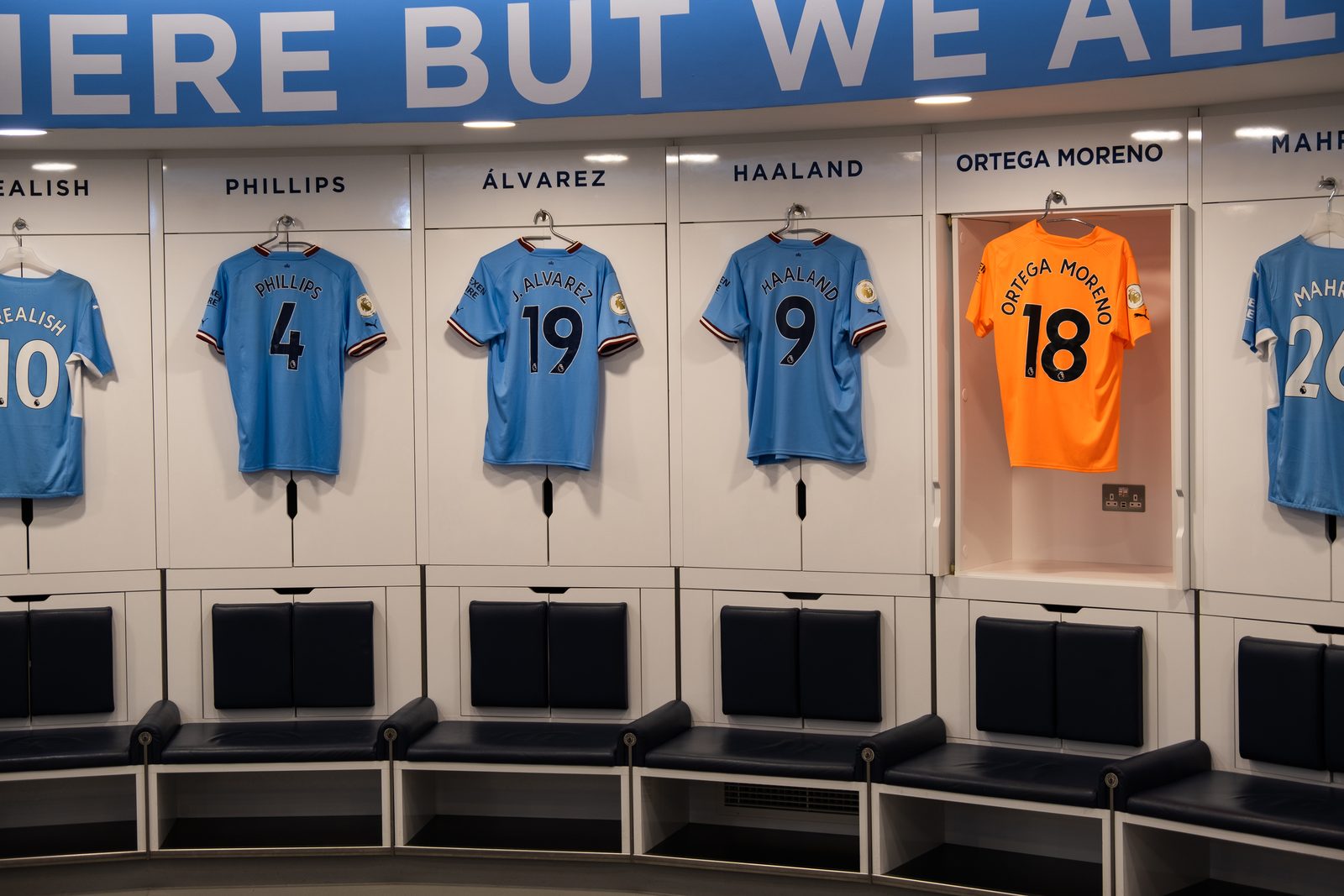
Arsenal’s failure to win the Women’s Super League title on the final day of the 2025-26 season, a 1-1 draw at Brighton that handed the championship to Manchester City, is not a story about a single afternoon’s misfortune, nor is it a story about the particular injustice of losing a title on goal difference or points or however the arithmetic fell on the last weekend. It is a story about a club that has spent three seasons under Jonas Eidevall assembling a squad of genuine quality, investing in facilities and recruitment at a level that puts Arsenal comfortably in the WSL’s upper tier of ambition, and then, when the moment arrived to convert that investment into the one prize that matters, failing not because of a lack of talent but because of a lack of something considerably harder to coach. Arsenal did not lose this title at Brighton. They lost it in the weeks and months that preceded Brighton, and the manager’s position, however uncomfortable it is to say this about a man who has built something meaningful at Borehamwood, must now be subject to the same scrutiny his squad was unable to withstand.
The Sky Sports report of the match itself is, in the scheme of things, almost beside the point. Arsenal needed to win; they drew. Brighton, a mid-table side with nothing to play for, took a point that was, on the balance of the match, a fair reflection of the contest. Arsenal had chances, as they have had chances all season, in matches against sides they were expected to beat and in the two or three fixtures against City themselves where the margins were genuinely fine. The problem is that “the margins were genuinely fine” is not a compliment when you are managing a squad assembled to win the league. Fine margins are the language of the underdog. Arsenal are not underdogs. They are a club that, in the WSL’s current financial structure, have the second-highest wage bill in the division, a recruitment department that has added international-calibre players in each of the last three windows, and a training facility that, since its move to London Colney, is among the best in the women’s professional game. When that club finishes second, the margins are not fine. They are a verdict.
The depth question is the first and most concrete of the issues Eidevall has not answered. Arsenal’s starting eleven, when fully fit, is as good as any in the WSL; there is no serious dispute about that. But football seasons are not played by starting elevens. They are played by squads, and Arsenal’s squad, over the course of a thirty-two-match league campaign, has not been able to absorb the injuries and the rotation demands that a title challenge requires. The absence of key players at critical moments, which every manager will tell you is a matter of luck, is only partly luck when it happens with sufficient regularity to become a pattern. Arsenal’s medical and performance staff have done competent work. The issue is that the manager’s system places specific physical and tactical demands on a small number of players in key positions, and when those players are unavailable, the replacements have not, over three seasons, been integrated into the system in a way that allows Arsenal to maintain their level. That is a recruitment failure, certainly, but it is also a coaching failure. The manager who cannot use his squad is the manager who has not built a system that can survive his squad’s inevitable absences.
The mentality question is the second, and it is the one that will sting more in the Arsenal dressing room because it is the one the players themselves will have to confront. Arsenal have, in each of the last two seasons, held positions of genuine strength in the title race and then, in the final third of the campaign, produced runs of form that belong to a club settling for second. The home defeat to Chelsea in March, the dropped points at Everton in April, and now the draw at Brighton are not isolated incidents. They are the signature of a team that does not, when the pressure is at its most acute, play with the conviction that its talent warrants. This is not a question of effort. Every player in that Arsenal squad worked hard at Brighton. It is a question of the collective belief that, in the decisive moments of a decisive match, you will find a way to win. Manchester City have had that belief this season. Arsenal have not. And while belief is not something a manager can simply instruct, it is something a manager cultivates over months and years through the way he handles adversity, the way he sets standards, and the way he holds his players to account when those standards are not met. Eidevall’s public demeanour has, throughout his Arsenal tenure, been composed and intelligent. His private management of a squad that has now twice failed to close out a title race is, on the evidence of what is visible, a question worth asking.
This is not a call for Eidevall’s dismissal. It is an argument that his position must be examined with the seriousness the failure demands. He has done real work at Arsenal. He has professionalised the environment, he has attracted players who would not have considered the club five years ago, and he has produced football, in patches, that has been the best in the division. But Arsenal did not hire him to produce patches. They hired him to win the league, and on the balance of three seasons, with the resources he has been given and the competition he has faced, he has not done so. The WSL’s growth, and the financial and competitive gap that is widening between its top four and the rest, means that finishing second at Arsenal is no longer a creditable outcome. It is a failure, and the man who presides over a failure of this magnitude, with this much investment and this much talent, does not get to define the terms on which his tenure is judged.
Manchester City are deserving champions. They have been the better side over the course of the season, and their consistency, in a campaign where Arsenal’s was intermittent, is the clearest possible argument for the title they have won. Arsenal must now decide whether the manager who built the squad that came close is the manager who can take it the final distance, or whether the final distance requires someone else. The evidence of this season, and the season before it, suggests the question is not rhetorical.
