Cairo, on a humid evening in early June, is not where anyone expected the USMNT’s World Cup narrative to begin, but the team’s pre-tournament training camp in Egypt has a way of stripping away the noise that follows American soccer wherever it goes. Christian Pulisic, the captain, arrived on Sunday with a carry-on bag and a pair of headphones, walked through the lobby of the team hotel without stopping for photographs, and went to his room. The rest of the squad trickled in over the following two hours. By Monday morning, Pulisic was the first player on the training pitch, twenty minutes before the session began, juggling a ball near the centre circle with the kind of unhurried calm that has become, over the past eighteen months, the defining texture of his captaincy.
The 2026 World Cup, which begins in eleven days across the United States, Canada and Mexico, is the tournament that was supposed to be built for Pulisic’s generation. The expansion to forty-eight teams, the North American host confederation, the decade of investment in MLS academies and the pipeline of dual-nationality recruitment that has reshaped the player pool since 2022, all of it was framed, in the years of planning, as the moment American soccer would arrive. Pulisic, at twenty-seven, is the one player whose career has tracked that timeline from the beginning. He was fourteen when he moved to Dortmund’s academy. He was twenty when he became the most expensive American transfer in history, at Chelsea, for sixty-five million dollars. He was twenty-three when he scored the goal in the CONCACAF Nations League final that felt, at the time, like a turning point. He is twenty-seven now, the captain of AC Milan, the captain of his country, and the player around whom the most consequential World Cup in American history will be organized.
The weight of that is not something Pulisic discusses in the language of destiny. In Cairo, on Monday, he spoke to a small group of reporters, including The Athletic’s Tom Bogert, about the tournament with the same measured tone he has used since taking the armband from Tyler Adams last year. He talked about the group. He talked about the need to “respect every opponent.” He talked about the squad’s depth. He did not talk about legacy. He did not talk about 1966, or 1994, or any of the reference points that the American sports media has been assembling since the draw placed the USMNT in a group with South Korea, Ghana and Ukraine. The calm is not performance. It is, by every account from inside the camp, the actual register of a player who has spent the past three years learning that the loudest version of leadership is rarely the most effective one.
That learning has a specific geography. It begins in west London, where Pulisic’s Chelsea career became, by its final two seasons, a study in the distance between talent and fit. He was a player of genuine Champions League quality, a technician whose first touch and movement between the lines belonged in the same sentence as the best attacking midfielders in the Premier League. He was also a player who was moved between positions with a frequency that suggested his coaches could never quite decide what he was. Right wing. Left wing. Attacking midfield. False nine. The versatility that had been sold as his greatest asset became, in practice, a kind of drift. By the time he left for AC Milan in the summer of 2023, for a fee reported at around twenty million euros, the narrative around Pulisic had shifted from prodigy to puzzle.
Milan, as it turned out, was the place the puzzle found its frame. Stefano Pioli, the manager who signed him, gave Pulisic a defined role on the left of a midfield four, with the freedom to drift inside and the defensive cover to do so without anxiety. In his first season, Pulisic scored fifteen goals in all competitions and provided twelve assists, numbers that were not merely career-best but that arrived with a consistency his Chelsea years had never produced. The following season, under Paulo Fonseca, the role has been refined rather than reinvented. Pulisic is the player who receives the ball in the half-space, who draws the fullback, who releases the overlapping run. He is not the loudest player on the pitch. He is, by the evidence of Milan’s dressing room, the most trusted.
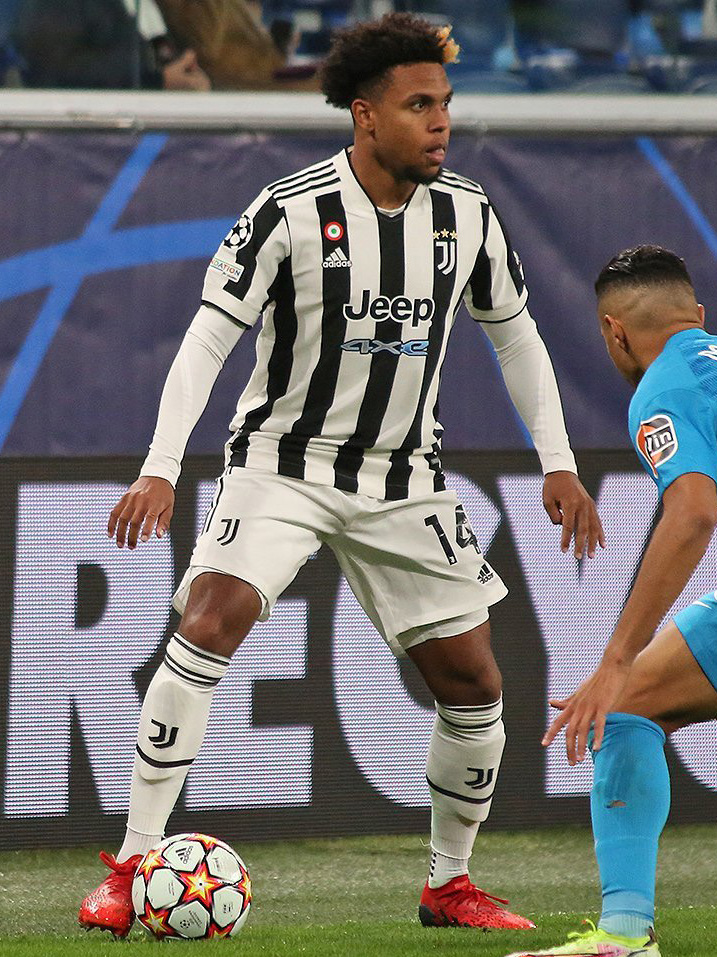
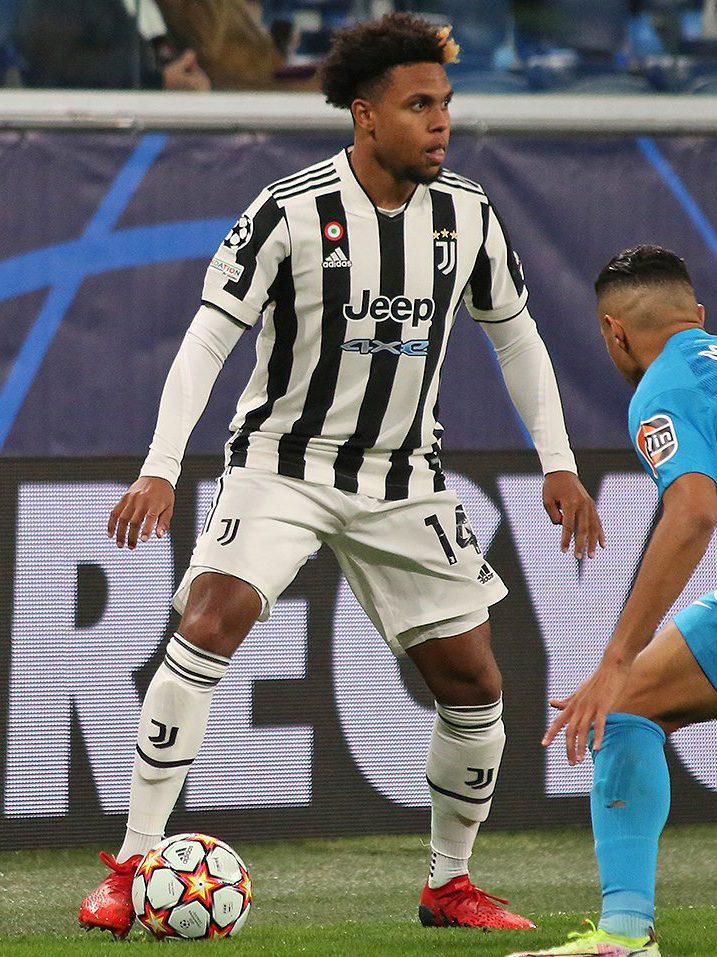
That trust is what the USMNT coaching staff, led by Mauricio Pochettino, has built its tournament plan around. Pochettino, appointed in 2024 after the post-Berhalter reset, has constructed a midfield that uses Pulisic as its primary creative source, with Weston McKennie and Yunus Musah providing the ball-winning and progression that allow the captain to operate in the final third. The system is not revolutionary. It is, in the language of the coaching staff, “Pulisic-friendly,” which is to say it asks him to do what he does best and does not ask him to do what he does not. The result, in the pre-tournament friendlies, has been a version of Pulisic that looks less like the explosive teenager who burst onto the scene at Dortmund and more like a player who has found the specific conditions under which his intelligence can operate.
The home World Cup adds a layer that no tactical system can account for. The American public’s relationship with the men’s national team has always been conditional, a mixture of genuine enthusiasm and a kind of cultural hedging that comes from decades of being told the sport does not belong to them. The 2026 tournament, with its three-nation format and its stadiums in cities from Los Angeles to Toronto to Guadalajara, is the first World Cup in which the United States is not a guest in someone else’s football culture. Pulisic, as the captain, will be the face of that transition. The marketing campaigns have already begun. His image is on billboards in Times Square and on the side of a building in Mexico City’s Roma Norte neighbourhood. The US Soccer Federation, in partnership with Nike, has built its entire tournament identity around a group of players of which Pulisic is the most recognizable, the most accomplished, and the most marketable.
Whether that visibility translates into the kind of legacy-defining performance that the American sports media has been projecting is a question that will be answered in July, not June. The group stage, against South Korea, Ghana and Ukraine, is navigable but not comfortable. Ghana, in particular, carries a specific weight for American soccer memory, having eliminated the USMNT from the 2010 and 2022 tournaments. Pulisic was not on the roster in either of those cycles. He is the captain now, and the captain’s job, in a home World Cup, is to carry the story the country is telling itself about its football.
In Cairo, on Monday evening, after the training session, Pulisic walked back to the hotel alone. The Egyptian sun was low and the air had cooled just enough to make the walk pleasant. A member of the kit staff, carrying a bag of training bibs, fell into step beside him and they spoke for a few minutes in low voices. The conversation was not about the tournament. It was about a restaurant in Milan that Pulisic had recommended to a teammate. The captain of the USMNT, eleven days before the biggest tournament in American football history, was talking about pasta. It was, in its small way, the most reassuring thing that had happened all week.