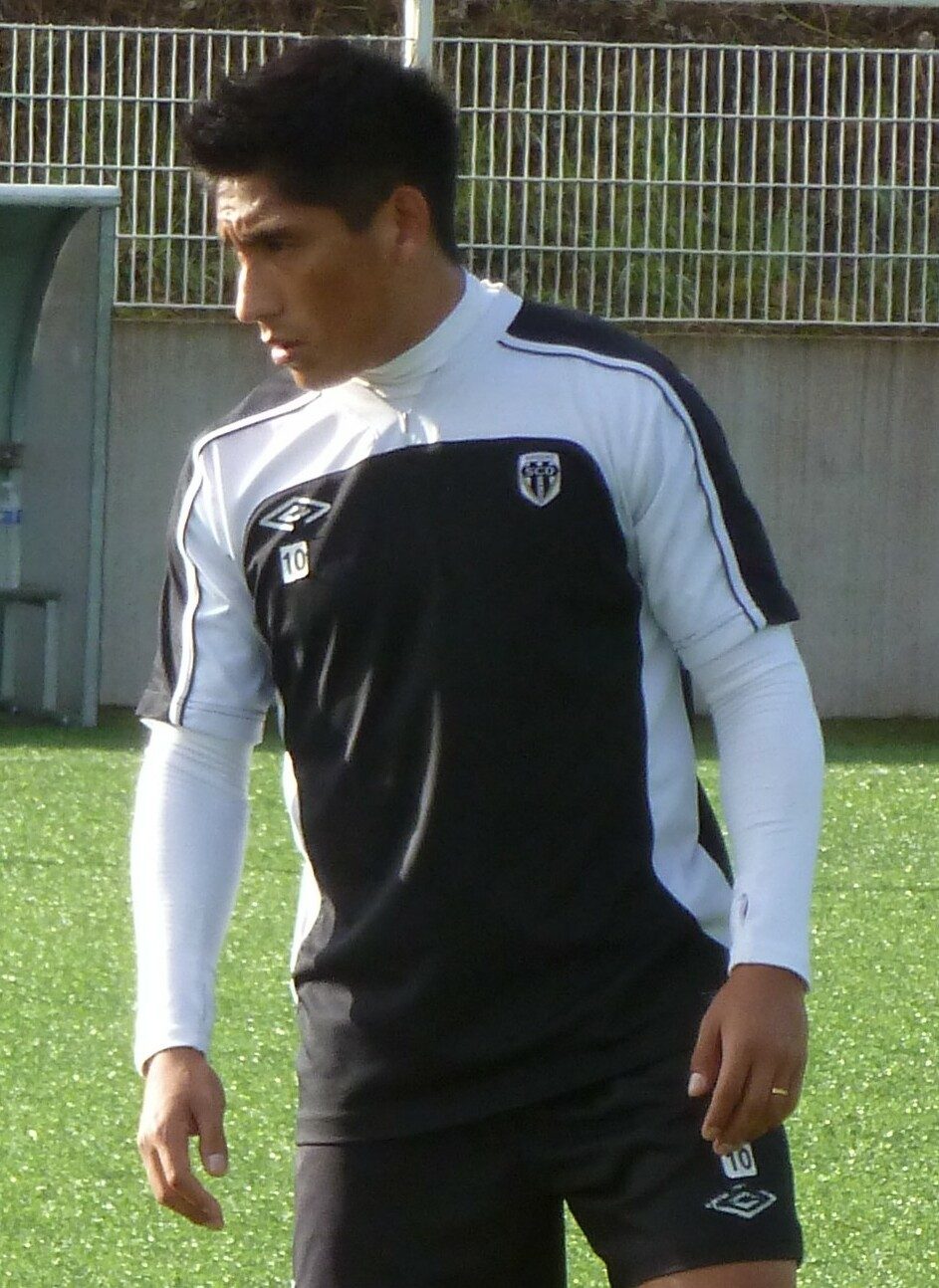
What happens to Paraguay’s shape when the player who connects every phase of it is no longer available? For a few days in May, Gustavo Alfaro’s staff faced that question in the worst possible way, after Diego Gómez went down with a knee injury during Brighton’s Premier League match against Fulham on 3 May. The 22-year-old midfielder, Paraguay’s most important single player ahead of a World Cup opener against the United States on 14 June, feared a cruciate ligament tear. The scan, as Charlie Eccleshare reported in The Athletic on 11 May, showed a bone bruise instead. Gómez expects to be fit for the tournament. The scare, however, illuminates exactly how much of Paraguay’s tactical plan depends on one man.
The role Gómez occupies
Alfaro’s Paraguay, through qualifying and into the friendlies of early 2026, have operated from a base shape of 4-3-3 that becomes, in the defensive phase, a 4-5-1 with the two eights dropping alongside the single pivot. Gómez plays as the left-sided eight, the one Alfaro trusts to cover the most ground. In the average qualifying match, Gómez’s heatmap stretches from the left touchline to the inside-right channel, a coverage width that no other Paraguayan midfielder replicates. He is not a ten. He is not a box-crasher. He is a connector, the player who receives from centre-backs under pressure, carries through the first pressing line, and releases the front three into the half-spaces.
The geometry matters. When Paraguay build from the back, the right-back steps inside to form a back three, and the left-back, usually Junior Alonso or Ramón Sosa, pushes high. Gómez fills the vacated left-sided zone. He becomes, in effect, a second left-back in possession, receiving from Omar Alderete, turning, and playing forward into the left channel where Miguel Almirón or Julio Enciso has peeled wide. Without Gómez, that chain breaks. The ball recycles. Paraguay go backwards. The press from the opposition’s right side becomes unopposed.
What the USMNT matchup demands
The United States under Gregg Berhalter’s successor will present a particular problem in the opener: a 4-2-3-1 with Timothy Weah or Malik Tillman pressing from the right wing, supported by a right-back who steps aggressively into midfield. The USMNT’s defensive trigger, visible in their March friendlies against Colombia and Brazil, is the pass from the opposition’s left centre-back into the left-sided eight. The right winger presses the centre-back; the right-sided ten steps onto the eight; the right-back covers the space behind. It is a press designed specifically to suffocate the zone Gómez inhabits.
Gómez’s value in this fixture is therefore not just his quality on the ball, but his body orientation. He receives on the half-turn more consistently than any other Paraguayan midfielder. In the 67th minute of Paraguay’s 2-1 win over Venezuela in qualifying, for example, Gómez received from Alderete with his shoulder open to the left touchline, let the ball run across his body, and played a first-time pass into Almirón’s feet inside the left channel. The sequence bypassed three Venezuelan pressers and created the overload that led to Paraguay’s second goal. That pass requires a specific combination: spatial awareness to find the pocket, the technical ability to play under pressure with the first touch, and the physical profile to shield the ball long enough for the front three to set their runs. Paraguay have no direct replacement.
The alternatives, and their costs
Paraguay’s depth chart behind Gómez offers two options, neither of them clean.
The first is Mathías Villasanti, currently at Gremio. Villasanti is a more traditional six, a ball-winner who sits in front of the back four and distributes short. Inserting Villasanti for Gómez would shift Paraguay’s shape from a 4-3-3 with an advanced left-eight to a 4-2-3-1, with Villasanti alongside the pivot and a dedicated ten ahead of them. The problem is positional. Villasanti does not cover the left-sided zone Gómez defends in transition. When the USMNT’s right winger drives inside, Villasanti tracks centrally, and the left channel opens. In the 31st minute of Paraguay’s friendly against Chile in March, Villasanti came on for the injured Richard Sánchez and immediately allowed Chile’s right winger to find space behind Alonso because Villasanti’s recovery run started from a central position rather than the left half-space.
The second option is Ramón Sosa, converted from left-back into the midfield role. Sosa has the engine and the defensive discipline. What he lacks is Gómez’s progressive carrying. Per StatsBomb’s event data from South American qualifying, Gómez averaged 4.3 progressive carries per 90 minutes, each covering an average of 11.2 metres. Sosa, across his limited midfield minutes, averaged 1.9. The difference is not marginal. It is the difference between a team that plays through a press and a team that goes around it, which means longer passes, slower transitions, and a USMNT defence that has time to set its shape.
The ripple effect on Paraguay’s attacking structure
Gómez’s absence would not only change the midfield. It would change the front three. Almirón, Paraguay’s most dangerous wide player, depends on Gómez’s left-sided presence to create the inside-outside dilemma for the opposing right-back. When Gómez occupies the half-space, the right-back has two men to track. When he does not, the right-back holds the touchline and Almirón faces a one-on-one he is less likely to win against the physical profile of Sergiño Dest or Joe Scally.
Enciso, the likely ten, would also suffer. Enciso’s best moments in qualifying came from receiving in the right half-space, where Gómez’s left-sided gravity had drawn a centre-back out of the central line. Without that pull, Enciso operates into a more congested zone, and his output drops.
What Gómez’s fitness means for 14 June
The bone bruise diagnosis, per The Athletic’s reporting, gives Gómez roughly five weeks to recover before the USMNT match. He will miss Brighton’s final two Premier League fixtures and will join Paraguay’s camp in the second week of June. Whether Alfaro risks him from the start, or uses him as a substitute with the plan to start him in the second group match against Colombia on 20 June, remains the central question of Paraguay’s preparation.
The tactical argument for protecting him is obvious. The argument against it is equally obvious: no one else can do what Gómez does in the zone the USMNT’s press is designed to attack. If Paraguay start without him, Alfaro’s opening match becomes a structural problem rather than a football match, and the United States’ press wins before a ball is kicked.
