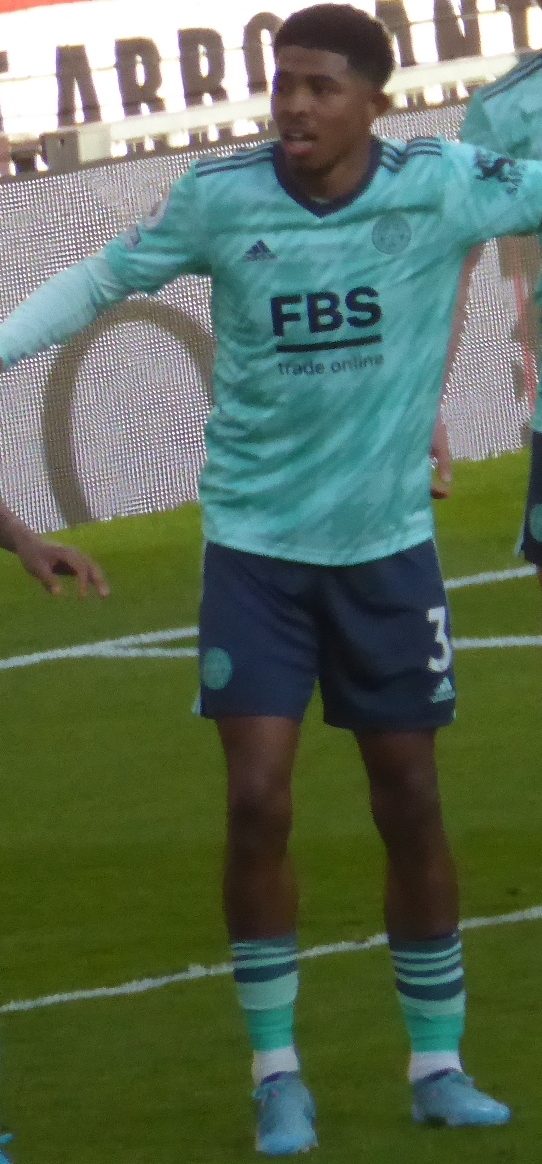
The rain at Stamford Bridge fell in sheets. It came sideways off the Shed End, soaking the first ten rows and turning the pitch into something slick and uncertain. Taiwo Awoniyi did not seem to mind. He scored after 120 seconds, a header from Serge Aurier’s cross that dropped inside the far post with the certainty of a man who has been scoring goals all season and sees no reason to stop.
Nottingham Forest won 3-1 at Chelsea on Saturday, and the scoreline, while accurate, undersells the strangeness of the afternoon. Chelsea had more possession. Chelsea had more shots. Chelsea, for twenty minutes in the second half, looked like the side who had spent £1.2 billion in three years and knew it. Forest did not care about any of that. Nuno Espírito Santo’s side took their chances, defended in the middle third with a discipline that has become their trademark, and left west London with three points that reframe the bottom half of the table.
The headline, though, belongs to Awoniyi. His second, seven minutes after the interval, was the better of the two. Morgan Gibbs-White, quiet for most of the first half, found him in the channel between Marc Cucurella and Wesley Fofana. Awoniyi took one touch to set himself and struck the second cleanly, low to Robert Sánchez’s left. The Chelsea goalkeeper got a hand to it. It was not enough.
The brace takes Awoniyi to 14 Premier League goals for the season. The Golden Boot race, which had looked like a procession for Erling Haaland since September, now has a second name attached to it in a way that feels genuine rather than sentimental. Haaland, on 17, remains favourite. He has the infrastructure, the service, the relentless habit of scoring in threes. But Awoniyi has something else: the momentum of a player who is not supposed to be here.
He cost Forest £17.5 million from Union Berlin in the summer of 2022. The fee, at the time, raised questions. Could a forward who had never scored more than 15 goals in a Bundesliga season carry the burden of a newly promoted club? The answer, in his first campaign, was complicated. Injuries limited him to 17 appearances. He scored twice. Forest survived, barely, and the assumption was that Awoniyi would be replaced.
He was not replaced. He was, instead, rebuilt. Nuno’s system suits him. The Nigerian international does not press from the front in the way that Jürgen Klopp or Mikel Arteta demand of their strikers. He waits. He holds his position on the shoulder of the last defender, and when the ball arrives, he finishes. The numbers support the method. His expected goals this season, per the Premier League’s official data, sits at 11.2. His actual tally is 14. The overperformance is not a fluke; it is the signature of a player whose movement in the box has sharpened.
The comparison with Haaland, statistically, is instructive. Haaland’s shot volume is higher. His expected goals per 90 minutes is the best in the division. But Awoniyi’s conversion rate, the percentage of shots that find the net, is superior. He is more clinical, if less prolific. The gap between them, three goals, is closeable if Forest can continue to create for him. The question is whether they can.
Forest’s underlying numbers suggest caution. They rank 15th in the Premier League for expected goals created this season. Their chance creation is below the divisional average. What they have, instead, is efficiency: a team that does not create much but takes what it is given. Awoniyi is the embodiment of that. He does not need five chances. He needs one.
The Golden Boot race, historically, rewards volume. Haaland’s 36-goal debut season in 2022/23 was built on a foundation of relentless service. Mohamed Salah’s 32 in 2017/18 came from a Liverpool side that dominated territory. Awoniyi’s challenge is different. Forest are not a possession side. They do not pin opponents back. They absorb, they transition, they strike. It is a method that suits cup football more than a 38-game league campaign, and it is a method that has carried them to ninth in the table with six matches remaining.
The wider picture matters. Forest’s season, which began with the shadow of a points deduction hanging over the City Ground, has turned into something unexpected. Nuno has built a side that is difficult to beat and, on days like Saturday, capable of dismantling opponents who cost five times as much. The crowd at the City Ground, which has been loyal through a decade of absence from the top flight, is beginning to believe that this is not a one-off.
Awoniyi’s contribution to that belief cannot be overstated. He has scored in six of Forest’s last eight league matches. His goals have been worth 11 points, a figure that, if removed, would drop Forest into the bottom half. He is not the only reason they are where they are. He is the most visible one.
The Golden Boot, if he wins it, would be the first by a Forest player since Nigel Clough shared it with Teddy Sheringham in 1988. The comparison is flattering and slightly absurd. Clough was a different kind of striker, a creator as much as a finisher. Awoniyi is more straightforward. He scores goals. The simplicity of the description is the point.
Haaland remains the favourite. He has the schedule, the squad depth, the habit. But football, as Saturday showed, is not always about the expected. Awoniyi’s second goal at Stamford Bridge, struck through the rain with his weaker foot, was a reminder that the race is not over. It is, for the first time in months, genuinely open.
The Nigerian international walked off the pitch at full-time with the match ball tucked under his arm. The Chelsea fans had long since departed. The rain had eased. Forest’s travelling support, in the corner behind the goal, sang his name as he disappeared down the tunnel. It sounded, in the quiet of an emptying stadium, like a promise.
