The rain had stopped by half-time at Stamford Bridge, but the damage was already done. Nottingham Forest had arrived in west London with the quiet, unbothered look of a side that has decided it belongs somewhere and no longer requires permission. Three minutes in, Taiwo Awoniyi touched the ball twice. The second touch was a goal. The Shed End, which had been singing about Europe, went the colour of a held breath.
Chelsea 1 Nottingham Forest 3, then. The scoreline reads like an accident. It was not. Forest scored twice before the home side had completed five passes. The second, from Awoniyi again on 52, was the sort of goal that tells you a striker has stopped thinking and started finishing. Morgan Gibbs-White carried the ball forty yards, cut inside Levi Colwill, and delivered the kind of pass that is only selfish if you miss. Awoniyi did not miss.
The league’s official records show both goals within two minutes of the clock’s reading, which is either a data quirk or a reflection of how fast Forest move now. The first arrived in the second minute. The second came forty minutes later. In between, Chelsea had most of the ball and none of the answers.
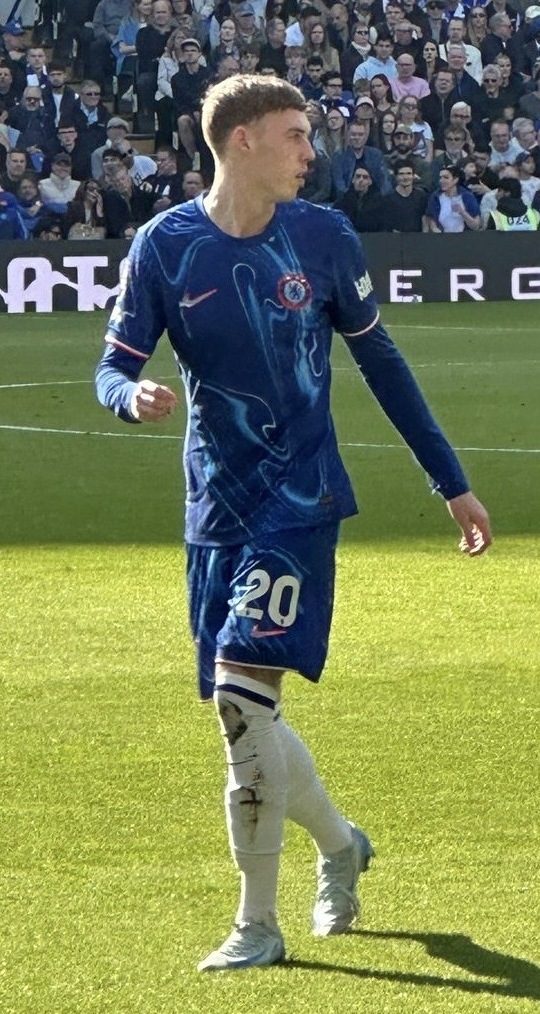
Enzo Maresca’s side did not lack effort. They lacked a plan that was not already Forest’s plan. Cole Palmer drifted wide and then inside and then wide again, searching for the pockets that were supposed to exist, and the pockets had been packed. Moisés Caicedo won the ball three times in the first twenty minutes and gave it back twice, the second time in a position that invited Brennan Johnson to run at the Chelsea back line. The back line retreated. It had been retreating since the first whistle.
Forest’s shape, when it sat deep, was not the shape of a side that had come to defend. It was the shape of a side that had come to win. Nuno Espírito Santo has been building something at the City Ground since he arrived, and the something does not have a name yet, but it has a centre of gravity. When Forest broke, they broke with numbers. When they held the ball, they held it with the patience of a team that knows its moments will come.
The second half began with the same question Chelsea had failed to answer in the first: what do you do when the other side is not afraid? Palmer had a chance on 54, a half-volley from twelve yards that cleared the bar and brought a sound from the Matthew Harding Stand that was closer to a prayer than a groan. Two minutes later, Gibbs-White was running again, and Awoniyi was finishing again, and Stamford Bridge was watching the way supporters watch when they can already feel the table shifting beneath them.
Forest’s third came from a corner that Chelsea failed to clear. The details of the goal matter less than the detail of the celebration: Awoniyi, arms wide, running towards the away end that had never stopped singing. It was a brace. It was, in the context of the table, more than a brace. Forest go into the final weeks with their European ambitions not just alive but nourished. The City Ground has not seen a season like this in twenty years, and the twenty years have taught the supporters not to trust the calendar, but to trust the football.
Chelsea, meanwhile, are staring at a table that no longer requires arithmetic to interpret. Maresca’s side have lost four of their last seven league matches. The top six, which seemed a reasonable ambition in September, now requires results that the current form cannot promise. The manager will be asked, on Monday, whether the season has gone. He will say no. He will be right about the maths. He will be less right about the football.
Pedro pulled one back in the third minute of added time, a header from a Marc Cucurella cross that briefly, uselessly, rearranged the scoreline. The goal changed nothing. It was a footnote that arrived after the story had already been written.
The story, the one that matters, is this: Nottingham Forest came to Stamford Bridge and scored three times and left with the sort of victory that reshapes a season. Awoniyi’s brace will travel furthest on the highlight reels, but the work was collective. Gibbs-White’s second-half performance, calm and ruthless in equal measure, was the kind of midfield display that earns a man a place on the shortlist for awards he will not win. Nuno’s substitutions were timed with the precision of a man who had already seen the ending.
Outside the ground, the away supporters were still singing when the Chelsea fans began to leave. The rain had started again. The puddles on the Fulham Road caught the floodlights and threw them back at the sky. It is April. The table is a map, and the map has changed.
