Mexico City, on a humid Sunday in late June, sits under a sky that cannot decide between rain and sun, and the Estadio Azteca has spent two weeks as the loudest room in world football. Forty of this World Cup’s hundred and four matches have been played. The tournament has reached the moment, two rounds into the group stage, when the shape of the thing begins to declare itself, when the sides that were going to fly have started flying and the sides that were going to negotiate with themselves have begun, audibly, to negotiate.
This is the first World Cup of forty-eight teams, twelve groups of four, and the arithmetic of qualification has rewritten what the final group round means. Twelve group winners advance. Twelve runners-up advance. Eight of the twelve third-placed sides advance. Thirty-two of the forty-eight go through, which sounds generous until you sit in a press box and watch a team that has taken four points discover that fourth place in a four-team group is still a closed door. Finishing first, second or third are not three versions of the same outcome this time. They are three different doors into the same building, and the last ninety minutes of each group decide which one a team walks through, or whether it walks through at all.
Start with the host, because the host has earned it. Mexico are the only side at this World Cup on a perfect record, six points from two matches, and a host nation that wins its opening two games does something to the country it is playing in that has nothing to do with tactics. The taquerías around the Azteca have been selling out by mid-afternoon on match days. A World Cup host that is also winning is a particular cultural weather system, and Mexico, in Group A, have generated it earlier than the country dared expect.
The other early separations are cleaner on the page than they have felt in the stadiums. In Group F, the Netherlands put five past Sweden, the kind of result that arrives looking like a statement and is, on closer inspection, a team finding the rhythm it had mislaid. In Group H, Spain beat Saudi Arabia four-nil, a Spanish side that plays the way the current Spanish footballing project insists it should play, patient on the ball until patience becomes a weapon. Both sit on four points, both lead their groups, and both have the look of teams whose last group game is about seeding rather than survival.
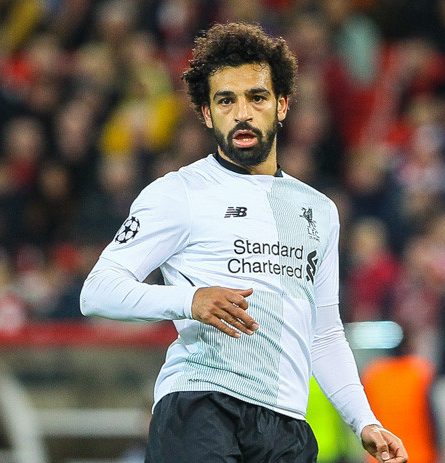
Brazil are top of Group C on four points, and Brazil at a World Cup are always two things at once, the football team and the idea of the football team, the second of which travels everywhere the first goes and occasionally gets in its way. Two rounds in, the team is ahead of the idea, which is where a Brazil manager wants it. Germany have been among the sides finding form too, the German team rebuilding something in real time, and Japan’s four-nil against Tunisia was the most complete ninety minutes any side outside the obvious contenders has produced. Egypt, with Mohamed Salah, have found enough to stay in their conversation.
Then there are the sides still arguing with themselves. Uruguay drew two-two with Cape Verde, a result that tells you more about Cape Verde, a nation of half a million people whose footballers have spent careers being told their country was too small for this stage, than it does about any Uruguayan failing. Belgium and Iran drew nil-nil, ninety minutes in which a Belgian generation that has been at the edge of something for a decade looked, again, like a team waiting for a reason to believe in itself. Belgium sit on two points in Group G, which at this World Cup is not catastrophe, but is the kind of total that turns a final group game into an examination.
Across the groups that have only played a single round, with a game in hand on the rest, the leaders are provisional but instructive. Norway lead Group I on three points. Colombia lead Group K on three. And in Group J, Argentina sit on three points, the holders moving through the early rounds with the economy of a team that has been here, that knows exactly how much is required and declines to spend a calorie more. England lead Group L on three, a single round played, the country they are playing for already several conversations ahead of the country they are playing in, in the way the English football press tends to be at this stage of a tournament.
The wide-open groups are where the format will earn its keep. Group E is led by Ecuador on a single point, which is to say it is led by nobody, four teams who have spent two rounds cancelling one another out and who arrive at the final round with everything still on the table. Group D, where Paraguay top on three, and Group B, where Canada lead on four, sit somewhere between the settled and the chaotic. Canada, a co-host alongside Mexico and the United States, are leading a World Cup group in a country that, a generation ago, did not think of itself as a football nation at all, and that quiet sentence is one of the larger cultural facts of this tournament’s first fortnight.
What the final group round actually settles, then, is not a simple hierarchy of winners and losers. It settles which of three doors each of forty-eight teams walks through. For Mexico and Spain and the Netherlands and Brazil, the last match is a question of position, of which knock-out path the bracket hands them, of whether they top the group and earn the kinder side of the draw. For Uruguay and Belgium, it is a question of presence, of whether they are in the thirty-two at all. And for Cape Verde, and for the other sides who arrived as the smaller name in their group, the best third place has become a live and reachable thing, eight tickets for the teams who finish third and finish it well, which is the format’s way of telling a small nation that two good results is no longer enough but might, with a third, be plenty.
A World Cup, in its group stage, is a machine for sorting countries into stories. The sides flying are writing the story they came to write. The sides sweating are discovering that the story is being written about them rather than by them. The decisive round, across all twelve groups, is the moment the machine stops sorting by reputation and starts sorting by result. That is the only sorting a World Cup has ever respected, and it is the reason the host’s perfect record and the minnow’s stubborn draw will both, by next week, mean exactly as much as the final standings say they mean, and not one point more.
