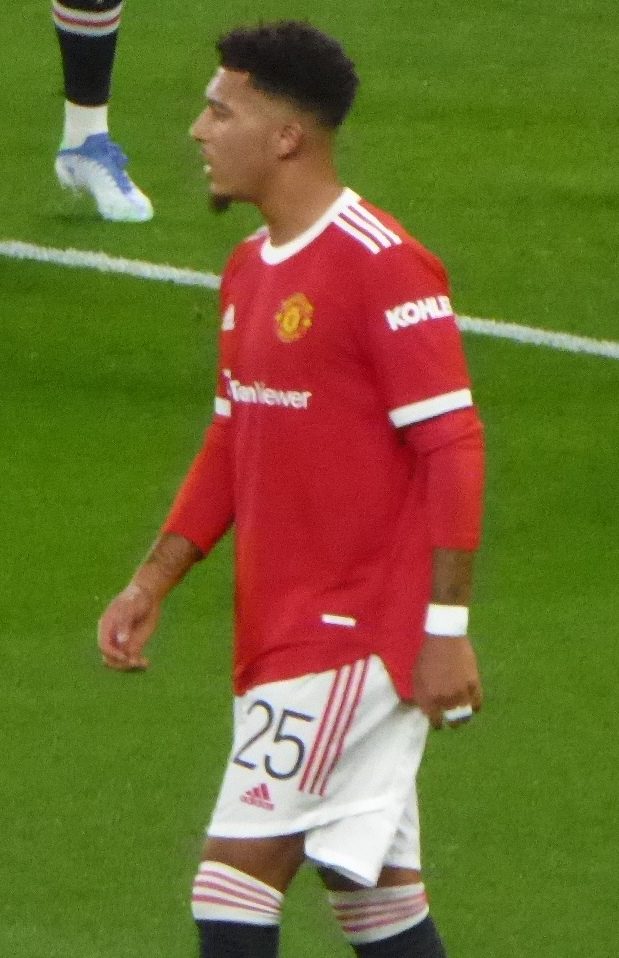
Manchester United’s decision to hold Bruno Fernandes, despite the midfielder’s public openness to a move this summer, is the club’s most expensive act of retention and its clearest signal of intent for the Ruben Amorim era.
Fernandes, 30, has two years remaining on his contract at Old Trafford, signed in a £47m deal from Sporting CP in January 2020 that carried a five-year initial term with a club option for a further season. United triggered that option in early 2025, binding him to the club through June 2027 and eliminating the risk of a cut-price exit. His residual book value on United’s balance sheet at the start of the 2025-26 financial year was approximately £12.6m, based on the original fee amortised over the six-year option-extended term. That figure matters because any sale below it would crystallise an immediate accounting loss, while a sale above it would generate a capital gain. Al-Hilal’s reported interest in the Saudi Pro League window would have required a fee comfortably above £40m to deliver United a meaningful profit, a sum Sky Sports reported <sup>T2 - Sky Sports</sup> no suitor has yet met.
The wage commitment is the heavier line. Fernandes earns a reported £240,000 per week under his current deal, a gross annual cost to the club of approximately £15.8m once employer contributions and image-rights allocations are included. Over the remaining two years of his contract, that is £31.6m in committed wages alone, a sum United would not fully recoup by selling him unless the transfer fee exceeded both the residual book value and a portion of the future salary obligation. In practice, a buyer at the reported £35m to £40m range would leave United writing off roughly £5m to £10m in unamortised costs while saving the wage outlay, a marginal financial gain that does not justify losing the squad’s most productive creator.
On the pitch, the numbers reinforce the case. Fernandes recorded 18 goals and 19 assists across all competitions in the 2024-25 campaign, the highest combined output of any Premier League midfielder, according to Opta data cited by Sky Sports. His expected-goals-plus-expected-assists (xG+xA) per 90 minutes of 0.72 placed him in the 97th percentile among midfielders in Europe’s top five leagues. United’s win percentage with Fernandes starting last season was 48.3 per cent; without him, it dropped to 31.6 per cent, a gap of 16.7 percentage points that no incoming transfer has yet been earmarked to fill.
The Profitability and Sustainability Rules calculus further complicates a sale. United’s PSR headroom for the assessment period ending June 2026 has been estimated by The Athletic at approximately £45m after adjustments, a position improved by the £12m profit booked on the Antony loan-to-sell structure with Real Betis and the £8m saved on the Casemiro contract termination. Selling Fernandes at £40m would add roughly £27.4m in capital gain to that headroom (the fee minus the £12.6m residual book value), but the replacement cost of a player of comparable output, likely £50m to £70m amortised over five years at £10m to £14m per year plus equivalent wages, would consume most of the gain within two accounting periods. Net result: United would be spending the same or more for an unproven adaptation to Amorim’s 3-4-3 system.
Fernandes’s agent, Miguel Pinho, held preliminary discussions with Al-Hilal representatives in May, as reported by The Athletic, but no formal offer was tabled. Pinho’s commission structure on the original Sporting-to-United deal was reported at approximately £4.5m, and any new transfer would likely trigger a renegotiated fee in the £3m to £5m range, a frictional cost that further narrows the margin on a sale. United’s position, as conveyed to Pinho through sporting director Jason Wilcox, is that no offer has met the club’s valuation and that Fernandes is central to the summer rebuild rather than a funding mechanism for it.
That rebuild has already seen the departures of Christian Eriksen, Victor Lindelof, and the loan exits of Jadon Sancho and Marcus Rashford, moves that collectively reduce United’s wage bill by an estimated £28m per year. The savings have been redirected toward the £50m acquisition of Matheus Cunha from Wolves and the £35m deal for Liam Delap from Ipswich Town, both players signed on five-year contracts that amortise at £10m and £7m per year respectively. Retaining Fernandes alongside those signings gives Amorim a spine of proven Premier League output rather than a squad built entirely on projection.
Strip it to its components and the Fernandes retention is less a romantic gesture than a financial and strategic one. United cannot afford to lose their most productive midfielder, replace him at comparable quality, and stay within PSR limits without sacrificing depth elsewhere. The captain stays because the spreadsheet says he has to.
