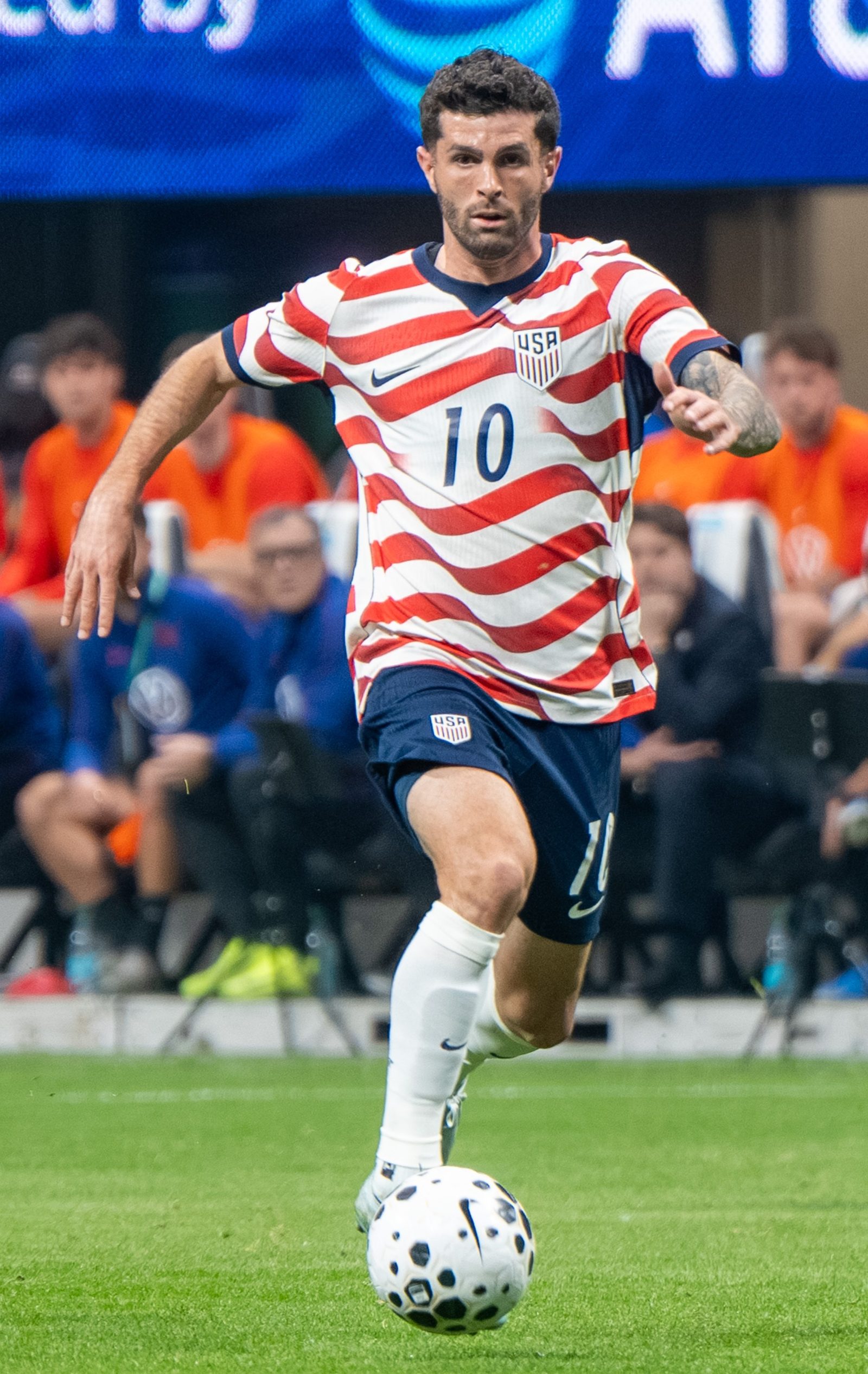
What does a team learn from a World Cup game it does not need to win? For Mauricio Pochettino’s United States, the Turkey match asks a different question from the first two group games: not how to qualify, but how to rehearse a version of themselves that might be required when qualification starts to become elimination. The Athletic has framed this as a rare dead rubber, with the USMNT’s place in the last 32 and group-table fate already secured. That makes Christian Pulisic the central paradox. The safest way to protect the team’s best attacker may be to spend 90 minutes learning how the attack functions without him.
The temptation is simple: rest Pulisic, manage any injury or yellow-card risk, and move on. The tactical opportunity is more interesting. Pochettino can use Turkey not as a friendly, because World Cup games never quite become that, but as a controlled stress test. What happens to the USMNT’s left-side rotations when Pulisic is not there to receive between full-back and centre-back? Who carries the ball through the left half-space? Does the team still build toward the same side, or does it become a right-sided possession team with a different final-third entry point?
Those are not housekeeping questions. They are knockout questions.
Pulisic’s value for the USMNT is not only that he can beat a defender. It is that his positioning simplifies the pitch for everyone else. When he starts from the left in a 4-2-3-1 or 4-3-3, he gives the left-back a clear reference point, gives the No 8 a diagonal passing lane, and gives the centre-forward a reason to hold between the centre-backs rather than drifting toward the ball. The shape becomes legible. Left-back on the outside, Pulisic in the left half-space, No 8 underneath, striker pinning the last line. From there, the US can either combine down the side or switch through midfield.
Remove him, and the geometry changes before the ball moves.
If Pochettino keeps the nominal shape against Turkey, the first rehearsal should be the left-side triangle. In the opening 15 minutes, the US should not simply ask a like-for-like winger to play Pulisic’s role. That would answer the wrong question. The better test is whether the team can create the same access with different player profiles: a winger holding the touchline, a No 8 arriving late into the half-space, and the left-back deciding whether to overlap or stay as the rest-defence full-back.
The diagram is straightforward. Centre-back receives. Turkey’s right-sided forward curves the press to block the pass into the US left-back. The US pivot drops between the centre-backs or beside them, inviting the next Turkish midfielder forward. The ball goes into the left No 8, who has started deeper than Pulisic usually would. One touch back inside, then out to the winger on the touchline. If Turkey’s right-back jumps, the channel behind him is open for the striker’s diagonal run. If the right-back holds, the winger has isolation. If Turkey’s ball-side midfielder recovers, the switch to the opposite full-back is the escape.
That is the sequence Pochettino needs on tape. Not because it is guaranteed to score, but because it tells him whether the team can still progress without Pulisic acting as the left-side connector.
There is a second, more radical option: make the Pulisic-less structure asymmetrical from the start. The US can build in a 3-2-5, with the left-back staying deeper as the third defender, the right-back pushing high, and the right winger becoming the primary one-v-one player. In that version, the left winger is not asked to replace Pulisic’s creative burden. He becomes the far-side finisher, arriving at the back post when play develops through the right half-space.
This may be the cleaner solution for a knockout contingency. It accepts the absence rather than pretending it does not exist.
Pochettino’s Tottenham teams often used asymmetry to protect their best attacking routes, although the personnel and international context are different. With the USMNT, the principle would be less about copying a club model and more about reducing the number of decisions required under pressure. If the left side is missing its usual reference point, do not force all progression through that side. Build right, finish left. Use the left side as the destination, not the engine.
Against Turkey, that could look like a 4-2-3-1 on the team sheet and a 3-2-5 in possession. The right-back advances into the outside lane. The right winger moves into the right half-space. The No 10 stays close enough to combine, while the striker pins the near centre-back. On the left, the winger holds a higher, narrower finishing position, with the left-back conservative behind him. The double pivot becomes the stabiliser: one player offering the first pass, the other screening Turkey’s counter-attacking lane.
The heat-map paragraph, if Pochettino gets it right, should not look balanced. It should show the US spending more possession time in the right half-space, with the left winger’s touches clustered higher and closer to the box than Pulisic’s usually are. It should show the left-back’s average position below the ball more often than beyond it. It should show the centre-forward receiving fewer touches near the left touchline, because the striker’s job in this model is not to help the team escape pressure, it is to keep the centre-backs occupied while the opposite side develops the attack.
That matters because Pulisic’s absence can create a hidden problem: the striker gets dragged into repair work. When the left side cannot progress, the No 9 often comes short to offer a wall pass. That may help one phase, but it empties the penalty area for the next one. A Pulisic-less structure should protect the striker from becoming a midfielder by default.
There is also an out-of-possession question. If Pulisic does not start, does the US press in the same 4-2-3-1 pattern, with the left winger jumping to the Turkish right centre-back or full-back, or does Pochettino lower that side by five to 10 yards and press more selectively? The answer should depend less on the replacement winger’s energy than on the spacing behind him.
The press Pochettino should rehearse is a trap, not a chase. Let Turkey’s right centre-back have the first pass. Keep the US left winger between centre-back and full-back, angled to block the line down the touchline. The striker screens the pass into the deepest midfielder. The No 10 waits on Turkey’s second midfielder. The trigger is the square pass into the right-back or the backward touch from the wide player. Then the US left winger jumps, the left-back steps only if the ball is controlled poorly, and the near pivot slides across to block the inside pass.
The detail is the left-back. With Pulisic in front of him, the left-back may feel safer stepping early because Pulisic can counter-press the inside lane. Without him, the step has to be more conditional. If the left-back jumps too soon and Turkey play around the corner, the US are defending a transition with the centre-back pulled into the channel. In a knockout game, that is exactly the kind of structural error that turns a cautious selection into a costly one.
The Turkey match is valuable because the scoreboard pressure is reduced. That does not mean the tactical pressure disappears. It changes form. Pochettino can ask players to live inside a pattern for 30 minutes rather than solving every possession through instinct. He can learn which winger understands the left-half-space role, which midfielder times the third-man run, and whether the right-sided build can become the main route without making the team predictable.
There is a yellow-card and fitness-management logic here too, raised in The Athletic’s preview of the lineup choices around Pulisic and the group finale. But if the decision is only protective, it wastes the match. Rest is useful. Rehearsal is more useful. The US do not need to discover in the 63rd minute of a knockout tie that their Pulisic-less attack has become a set of individuals waiting for someone to dribble past pressure.
The cleanest plan is staged. First half: start without Pulisic and keep the base structure close to normal, so the staff can see which relationships survive. First 20 minutes after half-time: shift into the asymmetrical right-sided build, with the left winger as a far-post attacker. Final phase: if game-state allows, rehearse the lower press, with the left side protecting the inside lane rather than jumping on every wide pass. That gives Pochettino three useful answers from one low-leverage fixture.
The wrong reading of a dead rubber is that it is a game without consequence. For the USMNT, the consequence is information. Pulisic is still the player who makes their attacking structure easiest to recognise, but a World Cup knockout phase rarely rewards teams with perfect conditions. The constraint before the last 32 is not whether Pochettino can protect his best attacker. It is whether, by protecting him, he can also build an attack that does not collapse in the spaces Pulisic usually solves.
